

Choose the right tool
Feeling Wheels
Best for emotional vocabulary, therapy, counseling, adults, teens, SEL, restorative circles, and team reflection.
Emoji Emotion Charts
Best for younger students, visual learners, quick check-ins, calm corners, and family conversations.
Feeling Wheel Posters
Best for classrooms, offices, therapy rooms, calm corners, and team spaces.
Toolkits
Best for people who want charts, activities, prompts, and facilitator guidance together.
What Is a Feeling Wheel?
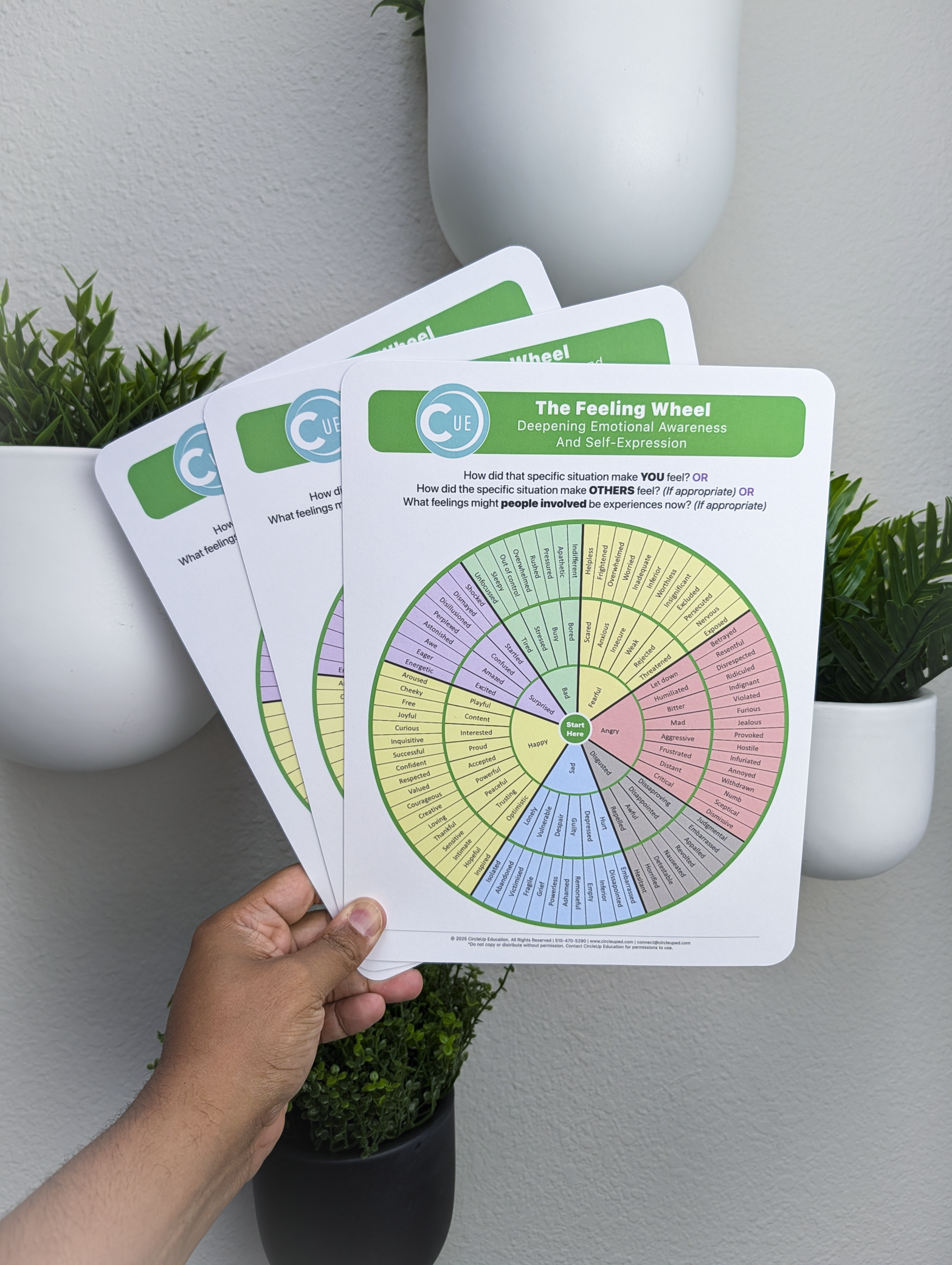
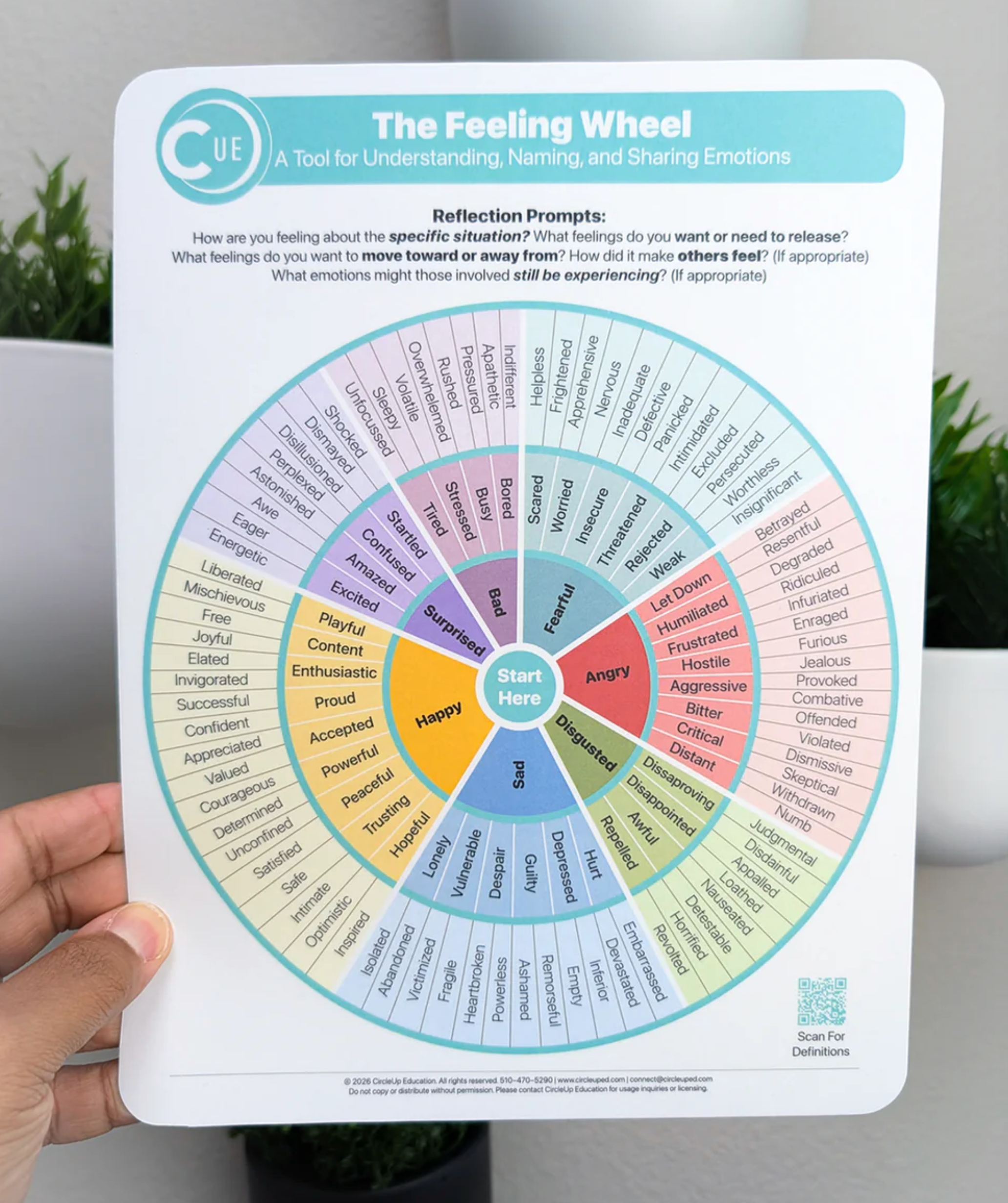
A feeling wheel, sometimes called a feelings wheel, emotion wheel, or emotion chart, is a visual tool that helps people identify, name, and communicate what they are feeling. Instead of stopping at broad words like happy, sad, angry, afraid, surprised, or overwhelmed, a feeling wheel helps people move toward more specific emotion words such as proud, disappointed, anxious, lonely, hopeful, frustrated, peaceful, embarrassed, or confused.
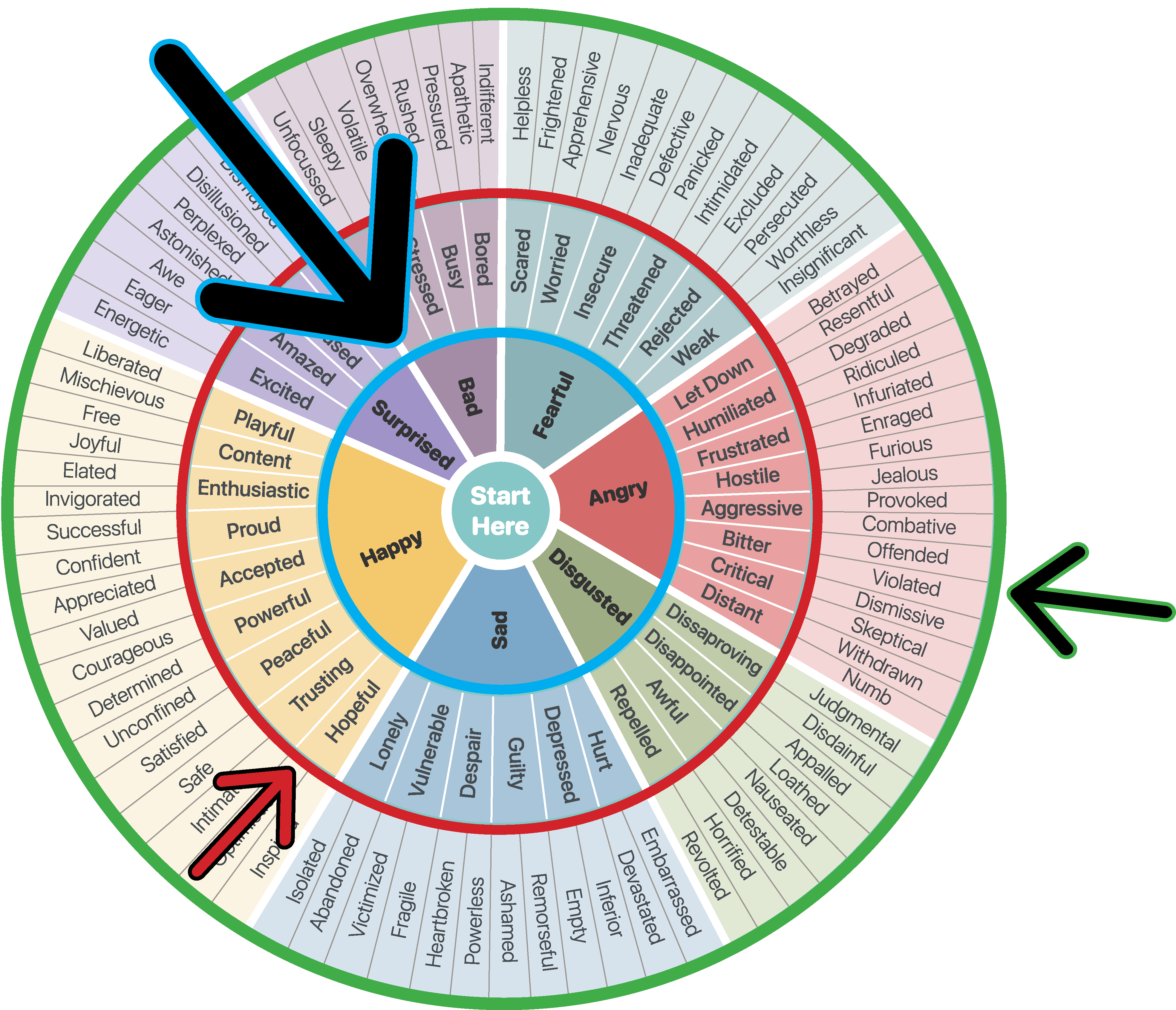
The center of a feeling wheel usually starts with broad emotion categories. As you move outward, the words become more specific and detailed. This structure helps people slow down, notice what is happening internally, and choose language that better matches their emotional experience.
Feeling Wheels Uncover Hidden Emotions
A feeling wheel is helpful because many people know they feel “off,” “upset,” “stressed,” or “mad,” but they may not know exactly what emotion is underneath. Naming the emotion can make conversations easier, reduce confusion, and support reflection before responding. That is why feeling wheels are often used in therapy, counseling, SEL classrooms, restorative circles, family conversations, coaching sessions, and workplace team check-ins.

CircleUp's Feeling Wheel & Emotion Charts
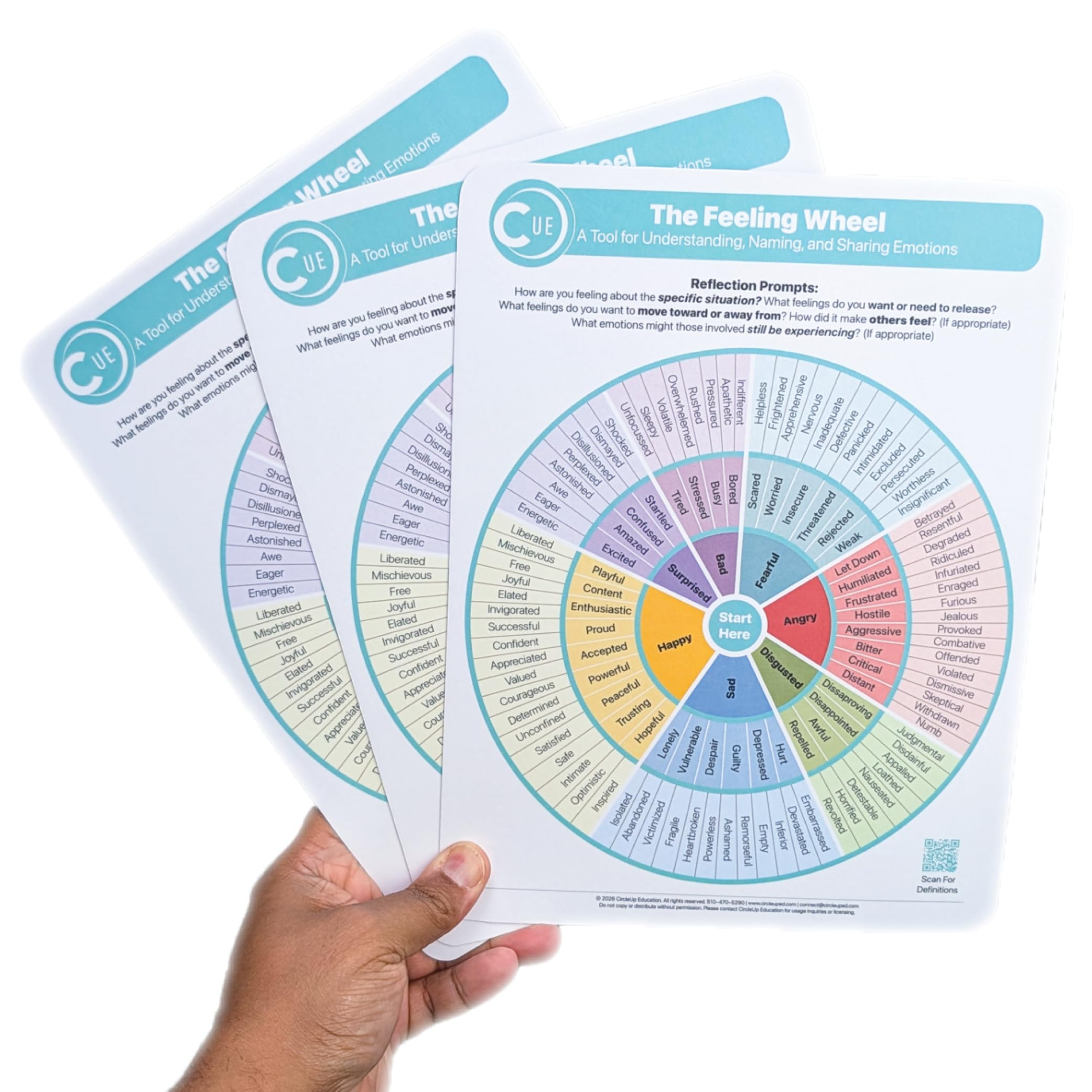
CircleUp’s Feeling Wheel is designed as a practical emotional-awareness tool, not just a list of feelings. It can be used before a difficult conversation, during a classroom check-in, in a counseling session, after a conflict, or as part of a group reflection. The goal is to help people better understand what they feel, why it may be showing up, and what they may need next.
How a Feeling Wheel Works
Start near the center of the wheel and choose the broad emotion that feels closest. Then move outward to find more specific feeling words that describe the experience more accurately. A person might start with “angry,” then realize they feel “frustrated,” “disrespected,” or “hurt.” Someone else might start with “happy,” then choose “proud,” “grateful,” or “peaceful.”
This process helps people move from general emotional reactions to clearer emotional language. It can also reveal that more than one feeling is present at the same time, which is common during conflict, stress, grief, transitions, teamwork, or personal reflection.
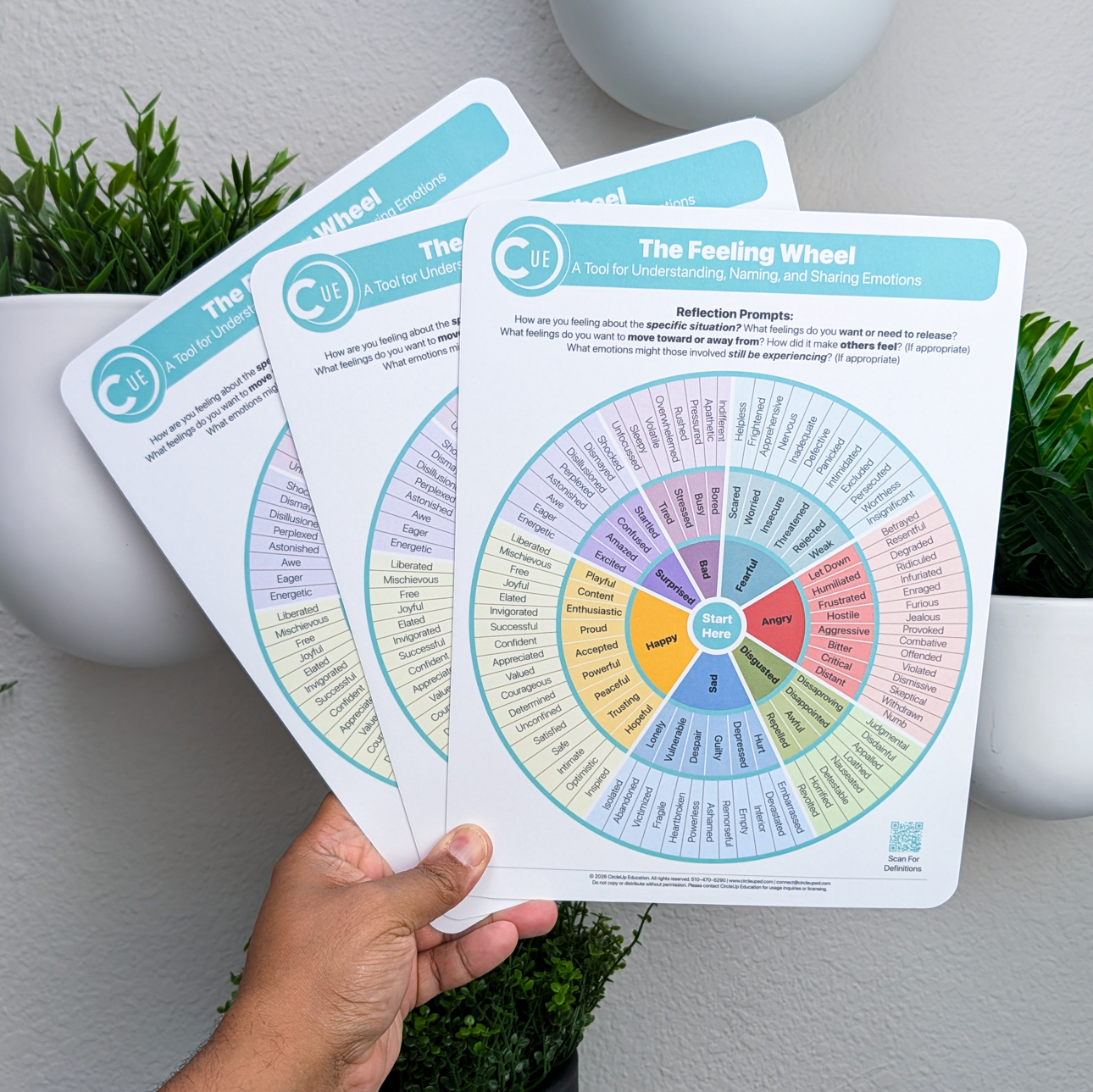
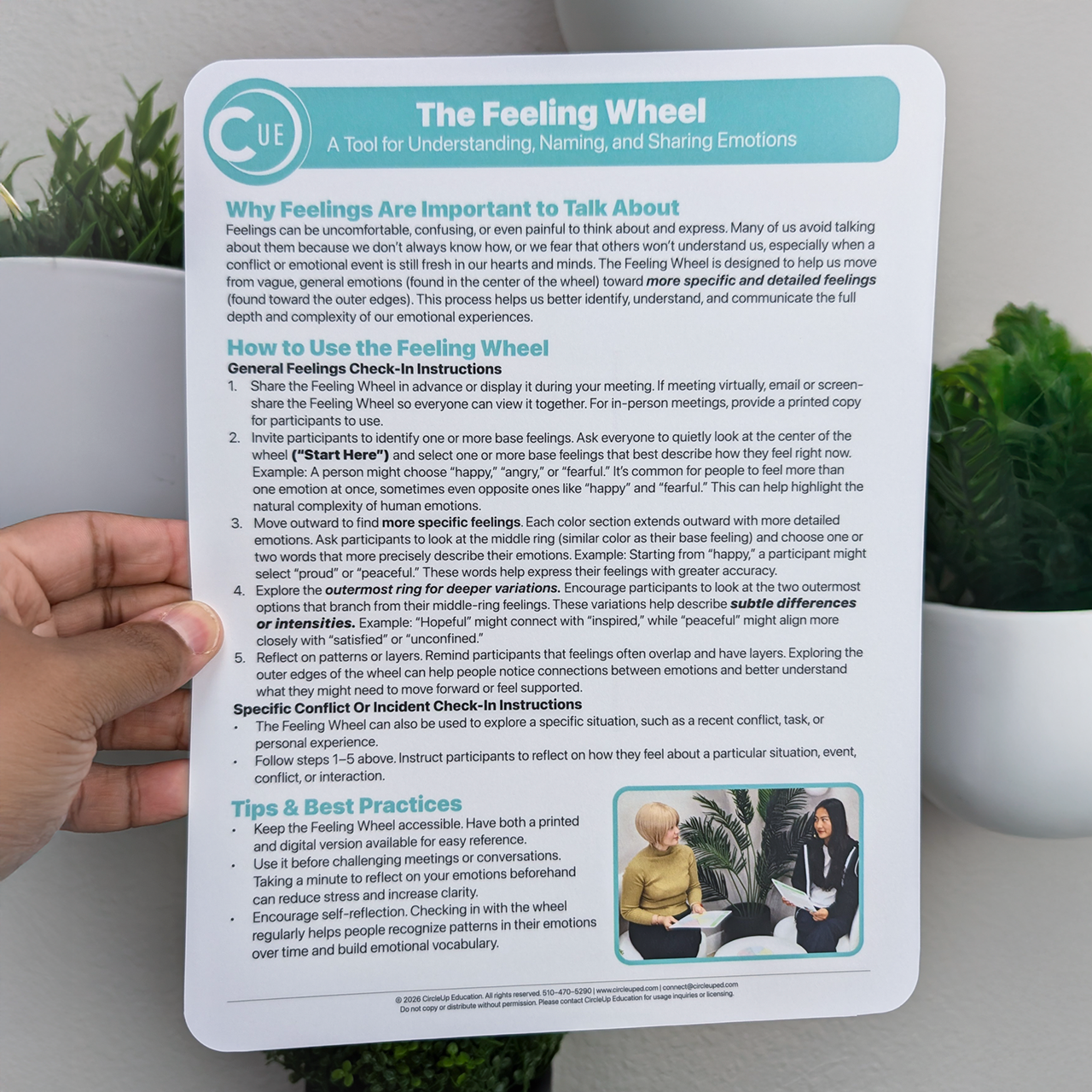

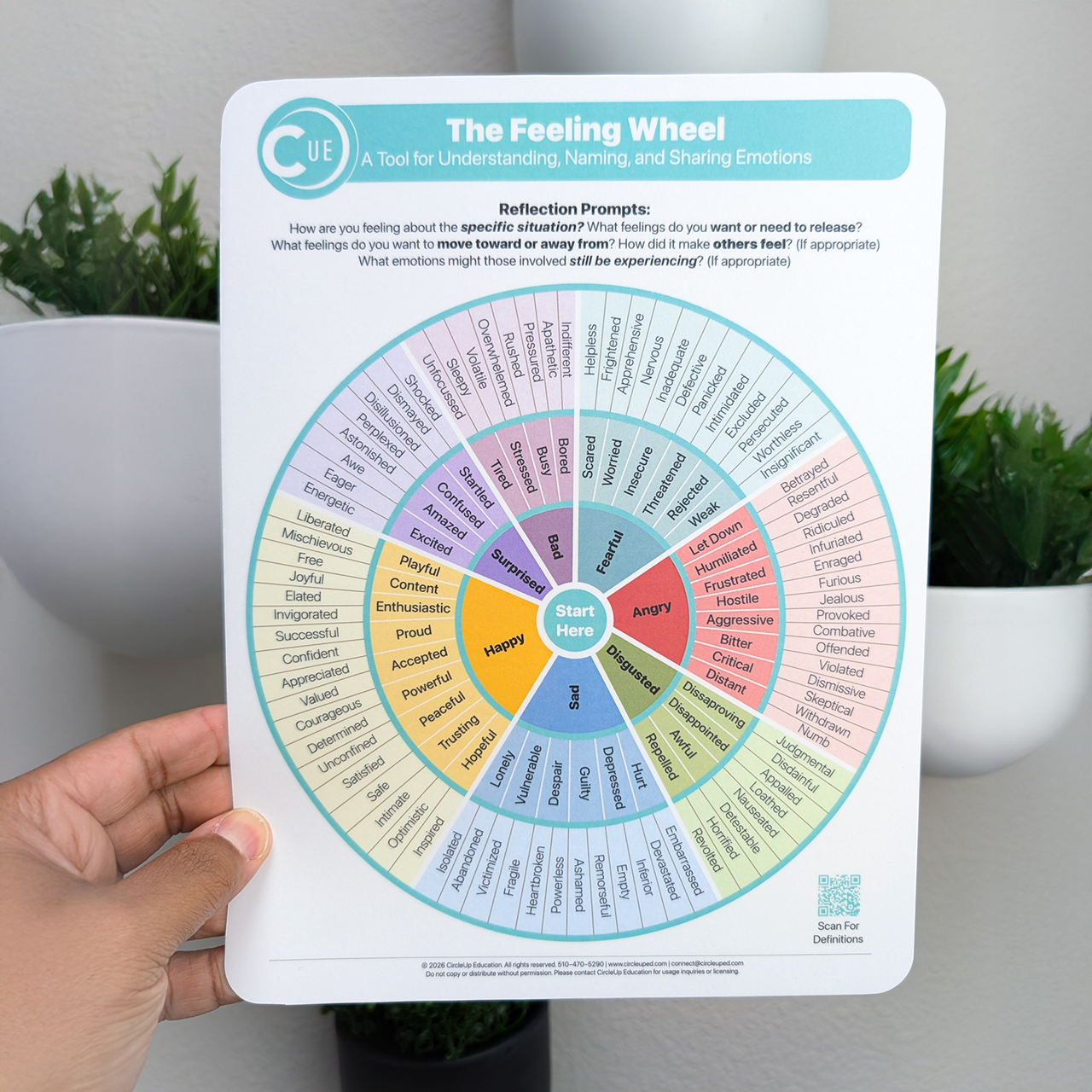
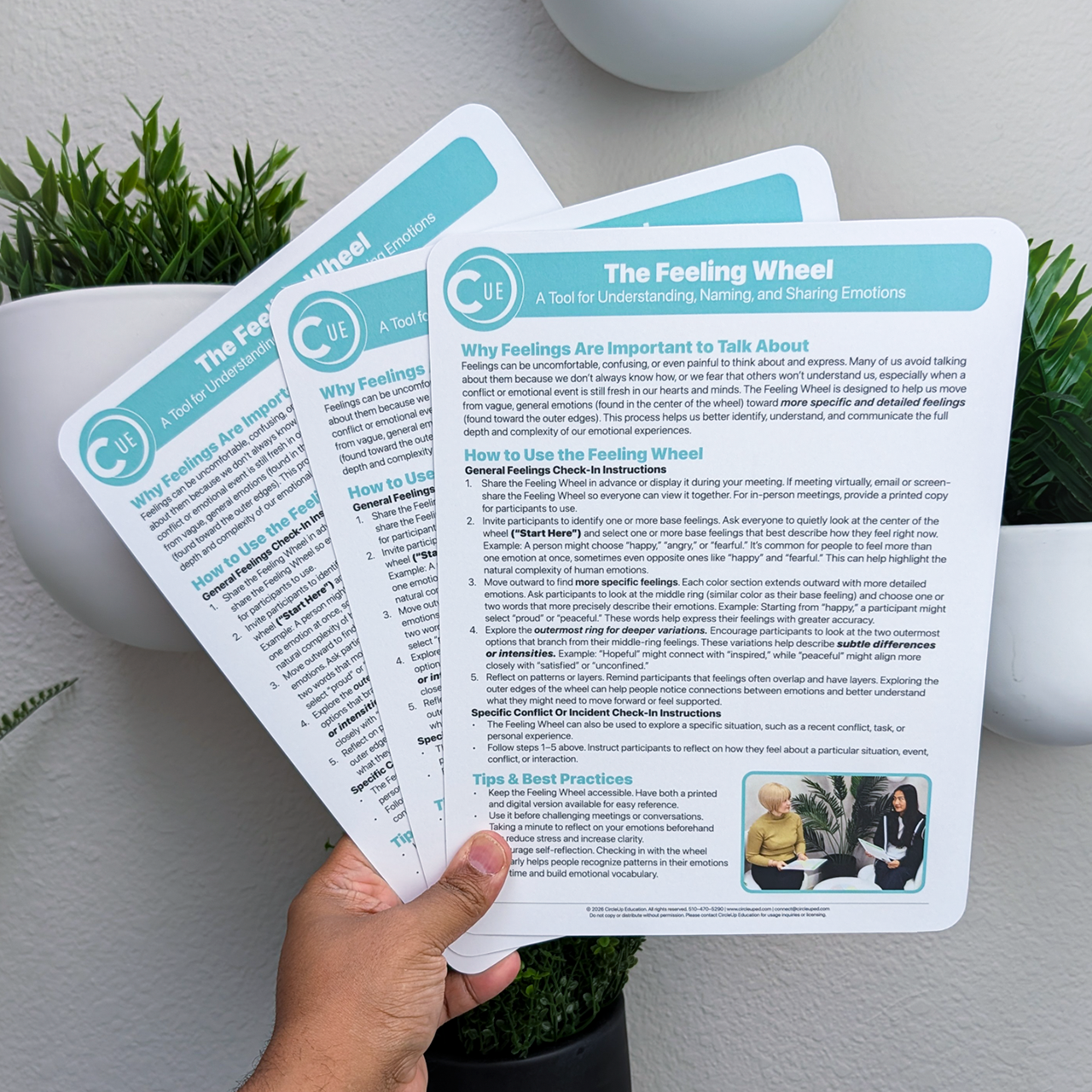
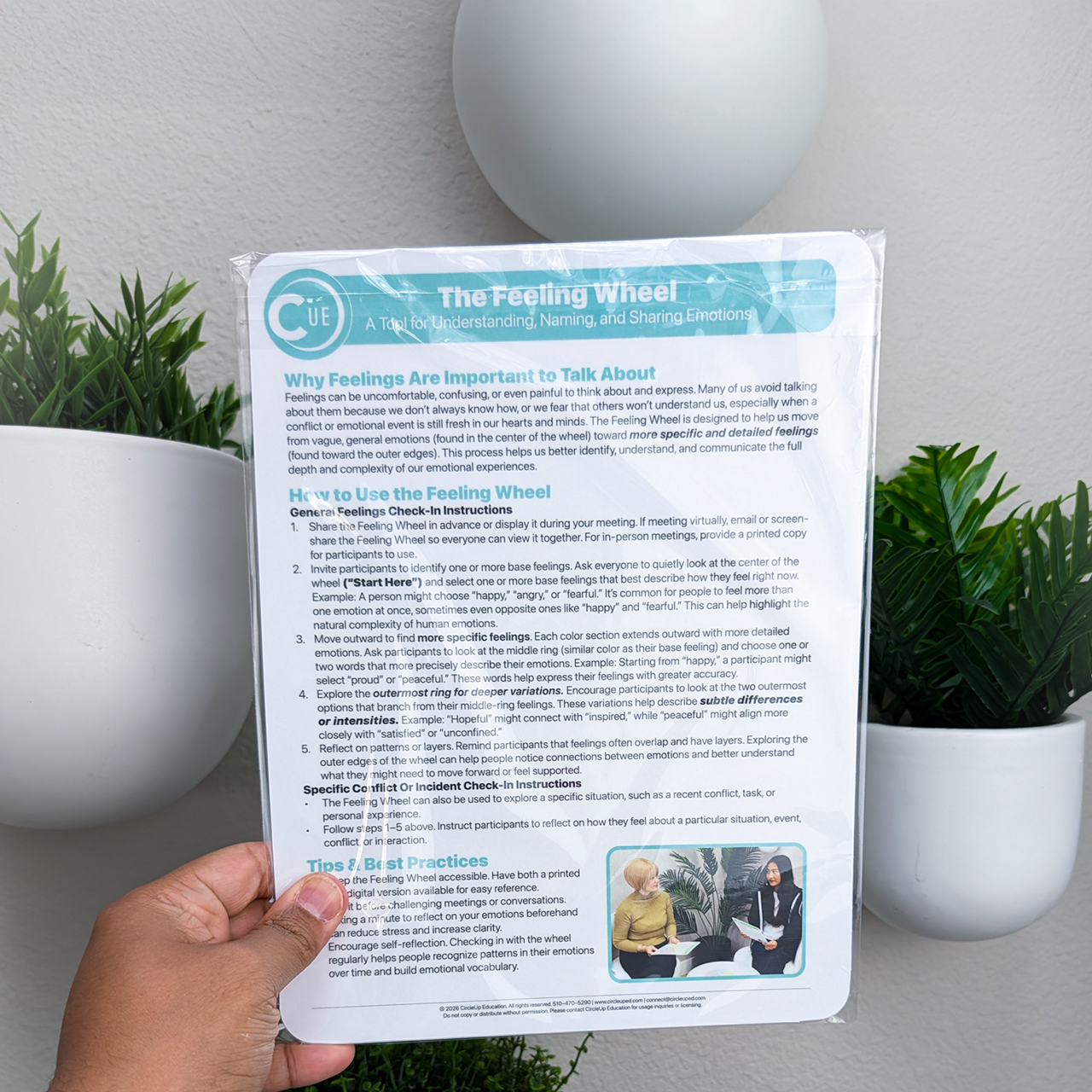
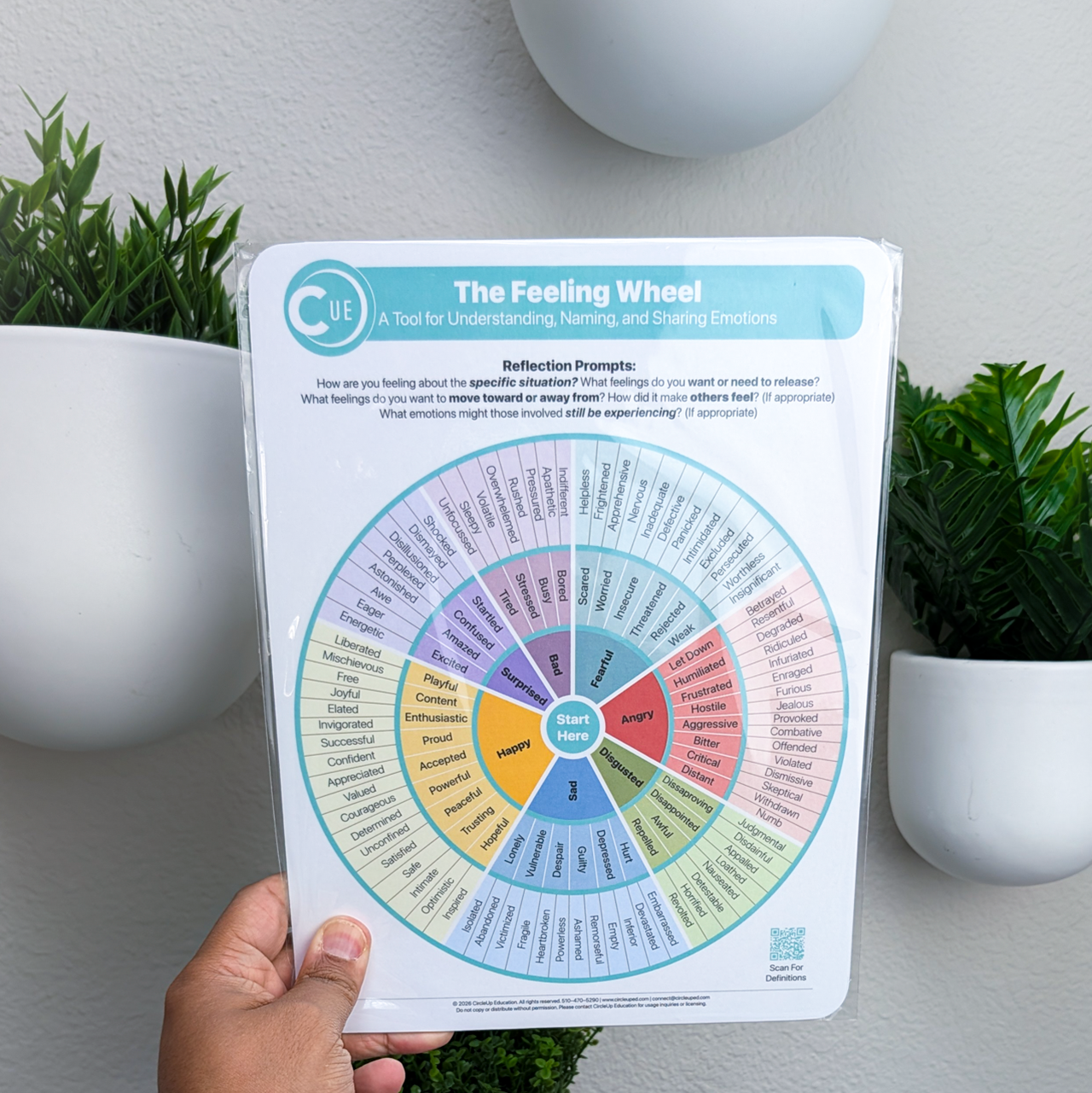

Feeling Wheel 3 Pack, 8.5 x 11 Soft-Touch Matte Laminated Cardstock
The CircleUp® Feeling Wheel™ is a physical emotion chart designed to help people move beyond broad feelings like happy, sad, angry, or stressed and find more specific words for what they are experiencing.
Start at the center with a broad emotion, then move outward through three levels of increasingly specific feeling words. This simple process can help build emotional vocabulary, deepen reflection, support clearer communication, and create better conversations about feelings and needs.
Each 3-pack includes:
• 3 physical 8.5 × 11 Feeling Wheels
• 100+ feeling words organized from broad to more specific emotions
• Thick 14 pt cardstock for greater durability
• Soft-touch matte lamination for a smooth, premium feel
• Double-sided design with the Feeling Wheel on the front and instructions and guidance on the back
• QR access to Feeling Wheel definitions and additional resources
Designed for therapy and counseling, classrooms and SEL, restorative practices, mediation and conflict resolution, workplace teams, youth programs, families, and facilitated group conversations.
This is a physical product—not a digital download.
Couldn't load pickup availability
Pickup available at 401 Roland Way
Usually ready in 24 hours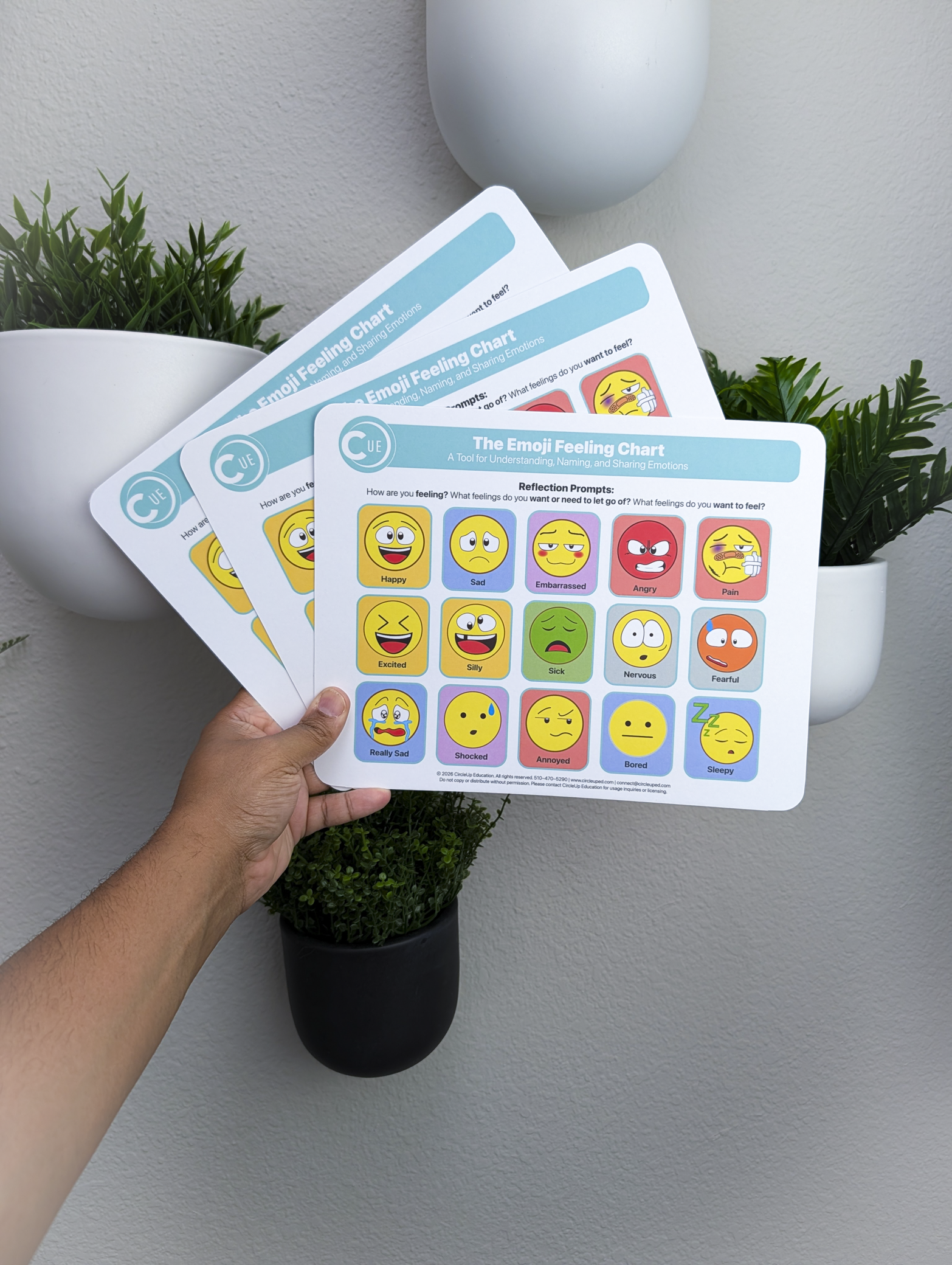
What Is an Emoji Emotion Chart?
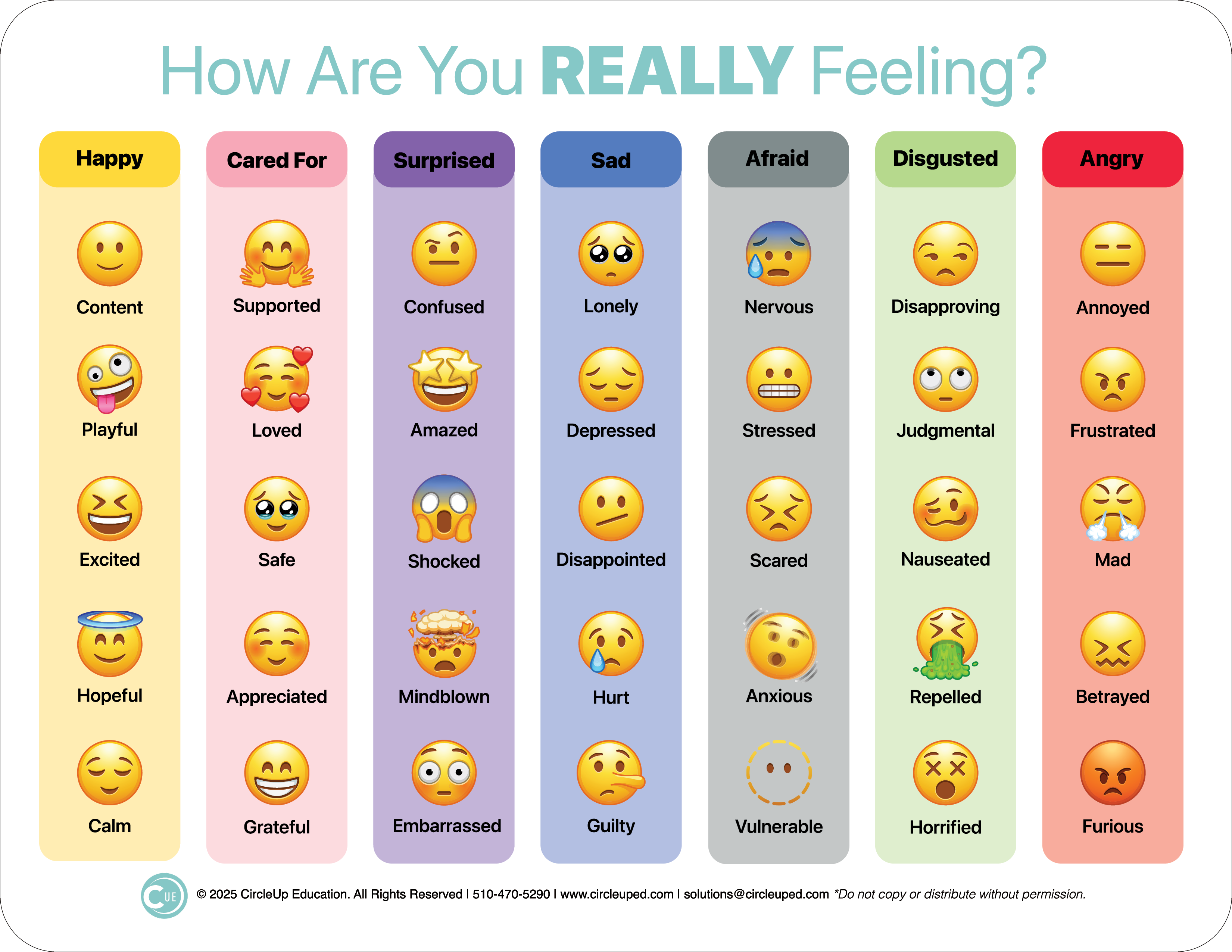
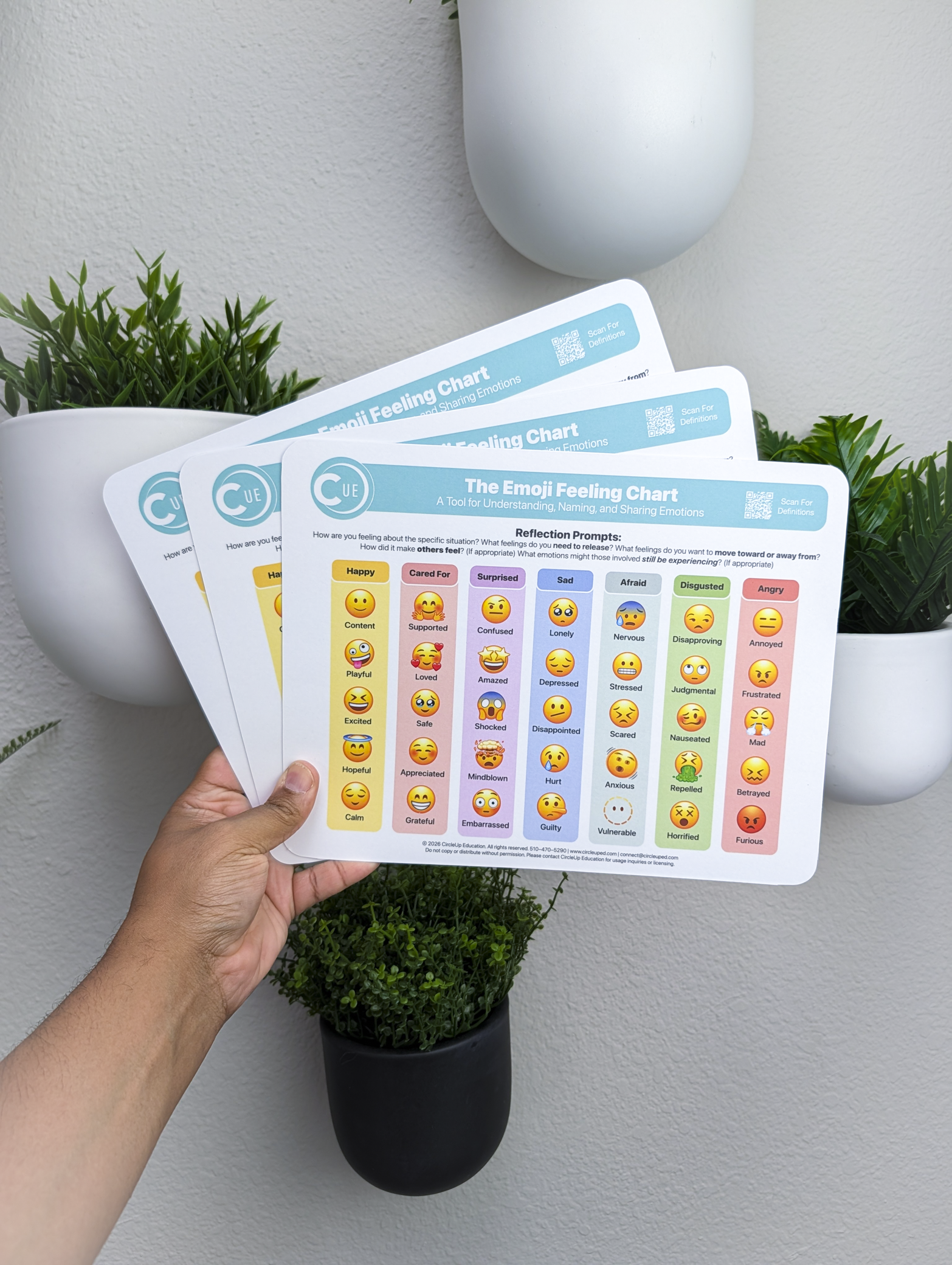
An emoji emotion chart, also called an emoji feelings chart or visual feelings chart, uses facial expressions and simple emotion words to help people identify how they feel. Instead of starting with a long list of feeling words, an emoji chart gives people a familiar visual cue they can point to, choose from, or use as a conversation starter.
Emoji emotion charts are especially helpful for younger students, visual learners, early emotional-literacy lessons, calm corners, counseling spaces, and quick classroom check-ins. They make it easier for someone to say, “This is how I feel,” even when they do not have the words yet.

How Do Emoji Emotion Charts Help?
Many people know they feel something, but they may not know how to explain it. An emoji emotion chart helps bridge that gap by connecting a facial expression with an emotion word.
This can help children, students, clients, families, and groups begin emotional conversations with more confidence. A person can choose the face that feels closest, name the emotion, and then answer simple follow-up questions like, “What happened?” “What do you need?” or “What would help right now?”
Recognize the feeling
Use facial expressions to quickly identify an emotion.
Name the emotion
Connect the image to a clear feeling word.
Start the conversation
Use the chart to talk about what happened and what support may be needed.
How to Use an Emoji Emotion Chart
Using an emoji emotion chart can be simple. Ask the person to look at the faces and choose the one that feels closest to how they feel right now. Then invite them to name the emotion and share what may have caused it.
You can keep the check-in quick or use it for deeper reflection.
Simple prompts:
Which face feels closest to how you feel right now?
What happened before you felt that way?
Where do you feel it in your body?
What do you need right now?
What would help you feel supported?
Both tools help people talk about emotions, but they support different levels of reflection.
Emoji Emotion Chart vs. Feeling Wheel
An emoji emotion chart is best for quick, visual emotional check-ins. It helps people recognize and name a feeling in a simple, approachable way.
A feeling wheel is best for deeper emotional vocabulary. It helps people move from broad emotions to more specific feeling words, making it easier to understand what they are experiencing and communicate more clearly.
Many classrooms, counseling offices, therapy spaces, and families use both. The emoji chart helps someone get started. The feeling wheel helps them go deeper.
Learn how feeling wheels, emoji emotion charts, and emotional-awareness tools can support SEL, therapy, counseling, classrooms, teams, and family conversations.
Frequently Asked Questions About Feeling Wheels & Emoji Emotion Charts
What is a feeling wheel?
A feeling wheel is a visual emotion chart that helps people identify, name, and communicate what they are feeling. It usually starts with broad emotions in the center, such as happy, sad, angry, afraid, surprised, or disgusted, and then moves outward toward more specific feeling words.
A feeling wheel helps people move from general emotions to clearer language, making it easier to understand what they feel, what they need, and what next step may be helpful.
How do you use a feeling wheel?
Start in the center of the feeling wheel and choose the broad emotion that feels closest. Then move outward to find more specific feeling words that better describe the experience.
For example, someone may start with “angry” and realize they feel frustrated, hurt, dismissed, resentful, or overwhelmed. Once the feeling is named more clearly, it becomes easier to reflect, communicate, and decide what support or action may be needed.
What is an emoji emotion chart?
An emoji emotion chart, also called an emoji feelings chart or visual feelings chart, uses facial expressions and simple emotion words to help people identify how they feel. Instead of starting with a long list of words, an emoji chart gives people a visual way to choose or point to an emotion.
Emoji emotion charts are especially helpful for kids, visual learners, classroom check-ins, calm corners, counseling sessions, family conversations, and early emotional-literacy activities.
What is the difference between a feeling wheel and an emoji emotion chart?
A feeling wheel helps people build emotional vocabulary by moving from broad emotions to more specific feeling words. It is useful for deeper reflection, therapy, counseling, SEL lessons, restorative circles, workplace check-ins, and adult or teen emotional awareness.
An emoji emotion chart is more visual and simple. It is best for quick emotional check-ins, younger students, visual learners, calm corners, family conversations, and early emotional-literacy work.
Many classrooms, counseling spaces, therapy offices, and families use both together.
Are feeling wheels for adults or kids?
Feeling wheels can be used by adults, teens, and children. Adults often use feeling wheels in therapy, coaching, workplace emotional intelligence, conflict reflection, journaling, and personal growth. Students and children may use them in SEL lessons, classrooms, counseling sessions, calm corners, and family conversations.
The key is choosing the right format. A feeling wheel works well for deeper vocabulary, while an emoji emotion chart may be easier for younger students or visual learners.
Do you provide professional development trainings that teach how to use the Feeling Wheel?
Yes. CircleUp Education provides professional development trainings for schools, cities, nonprofits, workplace teams, and other organizations that include the use of the Feeling Wheel, emoji emotion charts, and other relationship-building tools.
Several of our trainings either include the Feeling Wheel as part of the learning experience or are centered around similar tools that help people build emotional awareness, strengthen communication, navigate conflict, and create more connected communities.
Some of the main trainings that include or connect with the Feeling Wheel include:
B-Team
A professional development experience focused on helping teams build stronger relationships, communication, trust, and belonging.
https://www.circleuped.com/beteam
ChatterMatter
A training experience designed to strengthen communication, connection, and meaningful conversation skills.
https://www.circleuped.com/chattermatter
Circle Restora Relationship Circles
Our Circle Restora trainings include segments around using relationship-building tools, including the Feeling Wheel, to support reflection, emotional awareness, group dialogue, and restorative circle practices.
https://www.circleuped.com/circlerestora-relationship-circles?rq=circlerestora
Conflict Restora Mediator Training
Our Conflict Restora mediation trainings include modules around using the Feeling Wheel and emoji emotion charts to help participants identify feelings, reflect on needs, build empathy, prepare for mediation, and support conflict resolution or restorative justice processes.
https://www.circleuped.com/conflict-restora-mediator?rq=conflict%20restora
These trainings can help educators, school leaders, city staff, nonprofit teams, managers, facilitators, and organizational leaders learn how to use tools like the Feeling Wheel in real conversations, team-building activities, restorative practices, mediation preparation, classroom settings, and workplace culture work.
If your school, city, nonprofit, or organization wants support using Feeling Wheels or emoji emotion charts as part of a larger professional development experience, CircleUp Education can help you choose the training that best fits your goals.
Are emoji emotion charts only for children?
No. Emoji emotion charts are especially helpful for children and younger students, but they can also support adults, families, teams, and groups. Because emojis and facial expressions are familiar and easy to understand, they can make emotional check-ins feel more approachable.
Emoji emotion charts are useful when people need a quick, visual way to identify how they feel before having a deeper conversation.
What is the best feeling wheel for therapy or counseling?
The best feeling wheel for therapy or counseling is usually a durable, easy-to-reference chart that clients can use during sessions. Laminated 8.5x11 feeling wheels work well because they are portable, reusable, and easy to hold during individual or group conversations.
Feeling wheels can support emotional identification, reflection, body-awareness questions, communication, conflict processing, and conversations about what someone may need next.
What is the best feeling wheel for classrooms and SEL?
For classrooms and SEL lessons, the best feeling wheel depends on how it will be used. An 8.5x11 laminated feeling wheel is helpful for small groups, student check-ins, counseling folders, and classroom activities. A wall poster is better for calm corners, classroom displays, morning meetings, and group reference.
Emoji emotion charts are also helpful for younger students, quick check-ins, and visual emotional-awareness activities.
Choosing feeling wheels that allow students to color in the feelings and emotions can also be very helpful and enhance emotional awareness and communication.
Can feeling wheels be used in restorative justice circles?
Yes. Feeling wheels are useful in restorative circles because they give participants shared language for naming emotions, identifying impact, and reflecting on needs. They can help people move from reaction to reflection during conflict, repair conversations, and group check-ins.
A feeling wheel can support questions like: “What feeling came up?” “Who was impacted?” “What do you need now?” and “What might help repair the situation?”
Can feeling wheels be used at work or with teams?
Yes. Feeling wheels can be used with workplace teams for emotional intelligence, leadership development, meeting check-ins, team reflection, conflict debriefs, coaching, and communication training.
They help team members name what they are experiencing more clearly, which can support better conversations, stronger trust, and more thoughtful next steps.
What size feeling wheel should I choose?
Choose an 8.5x11 feeling wheel if you want a handheld tool for therapy sessions, counseling, SEL lessons, folders, small groups, or individual reflection.
Choose a 12x18 feeling wheel poster if you want a larger wall display for a classroom, therapy office, counseling room, calm corner, staff room, or team space.
Choose paper handouts or printable resources for student packets, workshops, journaling, remote sessions, and take-home activities.
What is the difference between a laminated feeling wheel and a printable feeling wheel?
A printable feeling wheel is useful for worksheets, journaling, remote sessions, student handouts, and one-time activities. A laminated feeling wheel is better for repeated use in classrooms, therapy offices, counseling spaces, restorative circles, and facilitation kits.
Printable resources are flexible and easy to distribute. Laminated charts are more durable, professional, and ready to use again and again.
Can I write on a laminated feeling wheel?
Some laminated charts may work with dry-erase markers depending on the finish, but not all laminated surfaces are designed for repeated writing. If you plan to write directly on the chart often, choose a dry-erase or writable feeling wheel product when available.
For guided writing, reflection worksheets or printable feeling wheel activities may be a better option.
Many educators and therapist use glossy laminated feeling wheels with dry-erase markers to write on and reuse their feeling wheels. Please note that some glossy laminated feeling wheel charts and posters may not be dry-erase. Make sure the feeling wheel clearly states that it can be used for dry-erase purposes. In additional, soft-touch laminated feeling wheels are not compatible with dry-erase markers.
Do you offer bulk feeling wheels for schools or organizations?
Yes. We offer bulk feeling wheels and emoji emotion charts for schools, districts, counseling teams, youth programs, organizations, and workplace teams.
The process is simple. Decide how many charts you need, then send us an email or schedule a free call with our team. We can provide a customized quote, answer questions about the best format for your group, and share payment options, including how to complete a standard order or initiate a purchase order.
We have the inventory and production capacity to print thousands of feeling wheels and emoji emotion charts, so we can support large school, district, organizational, or training orders.
You can also visit our bulk feeling wheel page to purchase directly from our store and have your order shipped quickly.
Click HERE for our bulk feeling wheels.
What is another name for a feeling wheel?
A feeling wheel may also be called a feelings wheel, emotion wheel, emotions wheel, emotion chart, feelings chart, emotional vocabulary chart, or emotional-awareness tool. These terms are often used when people are looking for a visual tool to help identify and communicate emotions.
How can a feeling wheel help during conflict, restorative justice conference or circle, or during the mediation process?
A feeling wheel can be a powerful tool during conflict resolution, mediation, restorative justice conferences, and circle processes because it helps participants move beyond the facts of what happened and reflect more deeply on how the incident impacted them emotionally.
In many mediation processes, there is an incident assessment and preparation phase where the people involved in the conflict meet with a mediator, facilitator, circle keeper, or guide to reflect on what happened and talk through the facts and details. In more modern mediation practices, restorative justice mediation, and restorative conference preparation, this process often goes deeper. Participants may meet with facilitators before coming together so they can process how they are feeling, identify what emotions have come up, and better understand what they may need in order to move forward.
A feeling wheel supports this preparation process by giving participants language for emotions that may be hard to name. Someone may start with a broad feeling like angry, sad, afraid, or hurt, then use the wheel to identify more specific emotions such as betrayed, embarrassed, dismissed, resentful, disappointed, anxious, guilty, or overwhelmed. This clarity can help them better explain their experience, understand what they need, and prepare for a more productive conversation with the other people involved.
Feeling wheels and emotion charts can also be used as empathy-building tools. In conflict resolution and restorative justice practices, participants are often invited to reflect not only on how they were affected, but also on how their actions, words, or decisions may have impacted others. A feeling wheel can help someone consider what another person may have felt during or after the incident, which can build deeper levels of empathy, accountability, and understanding.
This can be especially useful when facilitators are assessing whether participants are ready to come together for a mediation, restorative conference, or circle process. If someone can begin to name their own emotions, recognize the emotions of others, identify needs, and reflect on impact, they may be better prepared to participate in a meaningful and constructive process.
A feeling wheel can also support problem solving. Once participants have clearer language for what they feel and what others may have experienced, they can begin to identify what is needed next. This may include repair, apology, accountability, reassurance, boundaries, support, changed behavior, clarification, or a negotiated agreement.
In this way, the feeling wheel is not just an emotional vocabulary tool. It can support mediation preparation, restorative justice readiness, empathy development, conflict reflection, and the process of moving toward resolution, repair, or a shared path forward.