START HERE
Choose the broad feeling.
Begin at the center with the emotion that feels closest. There is no pressure to immediately have the perfect word.
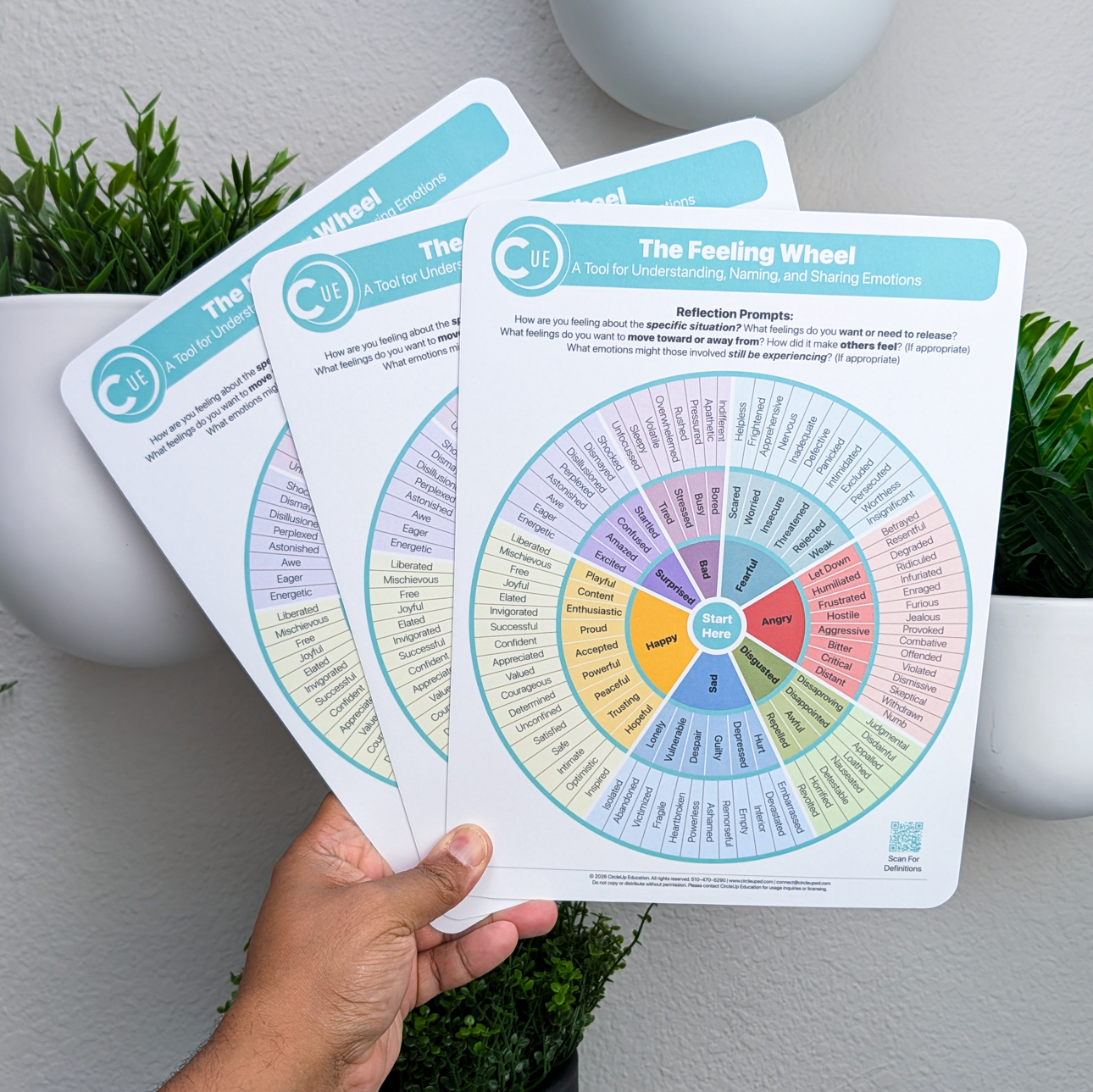

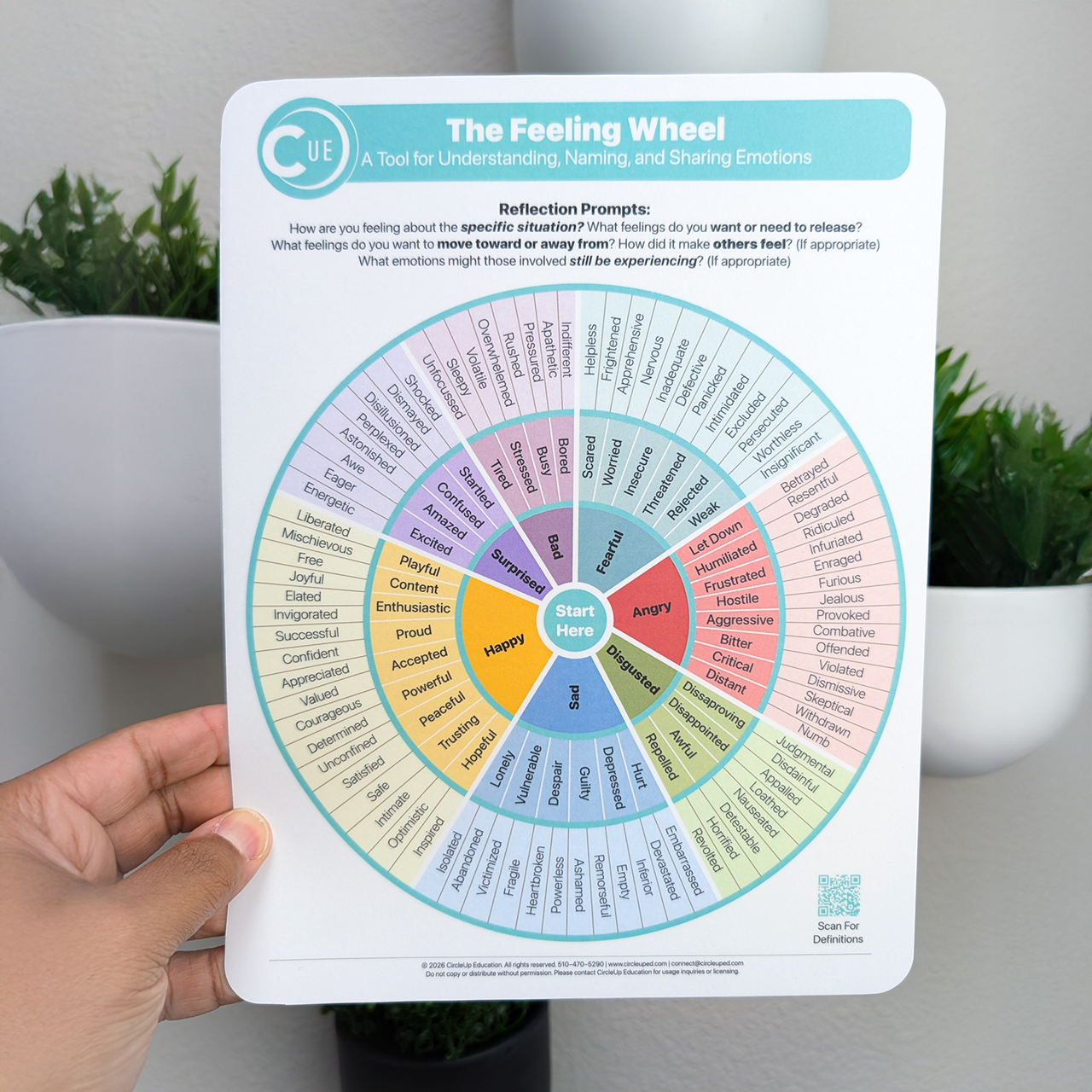
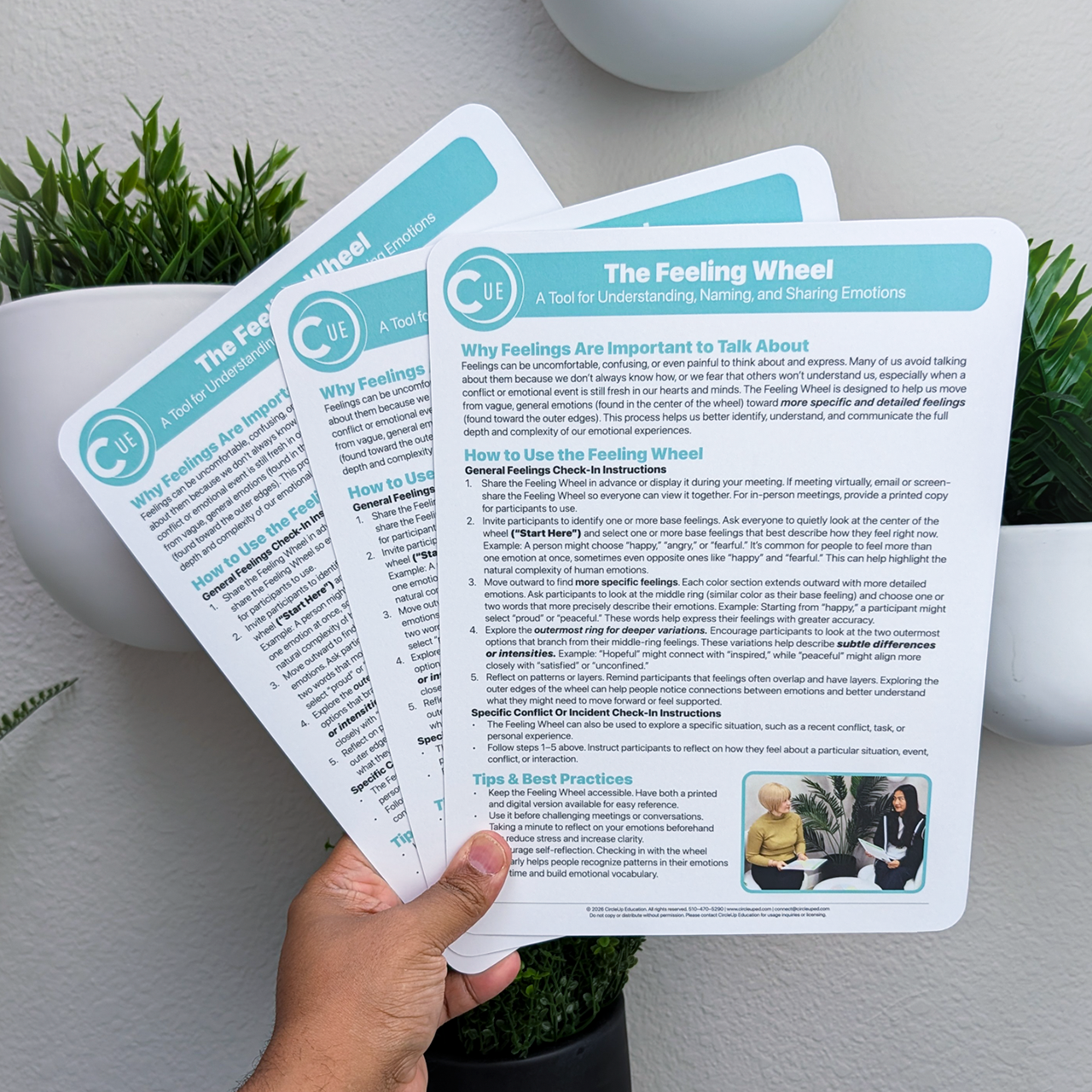
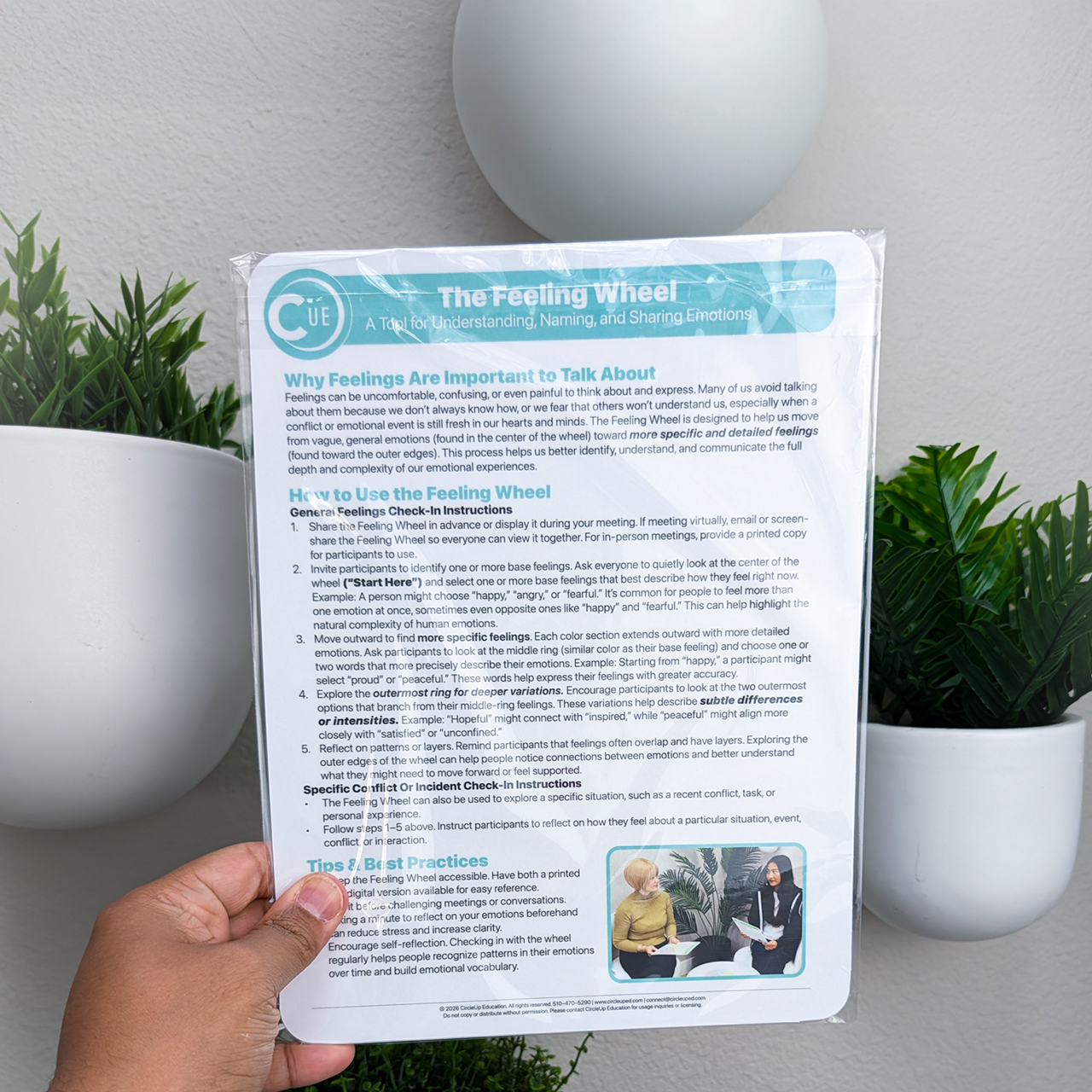
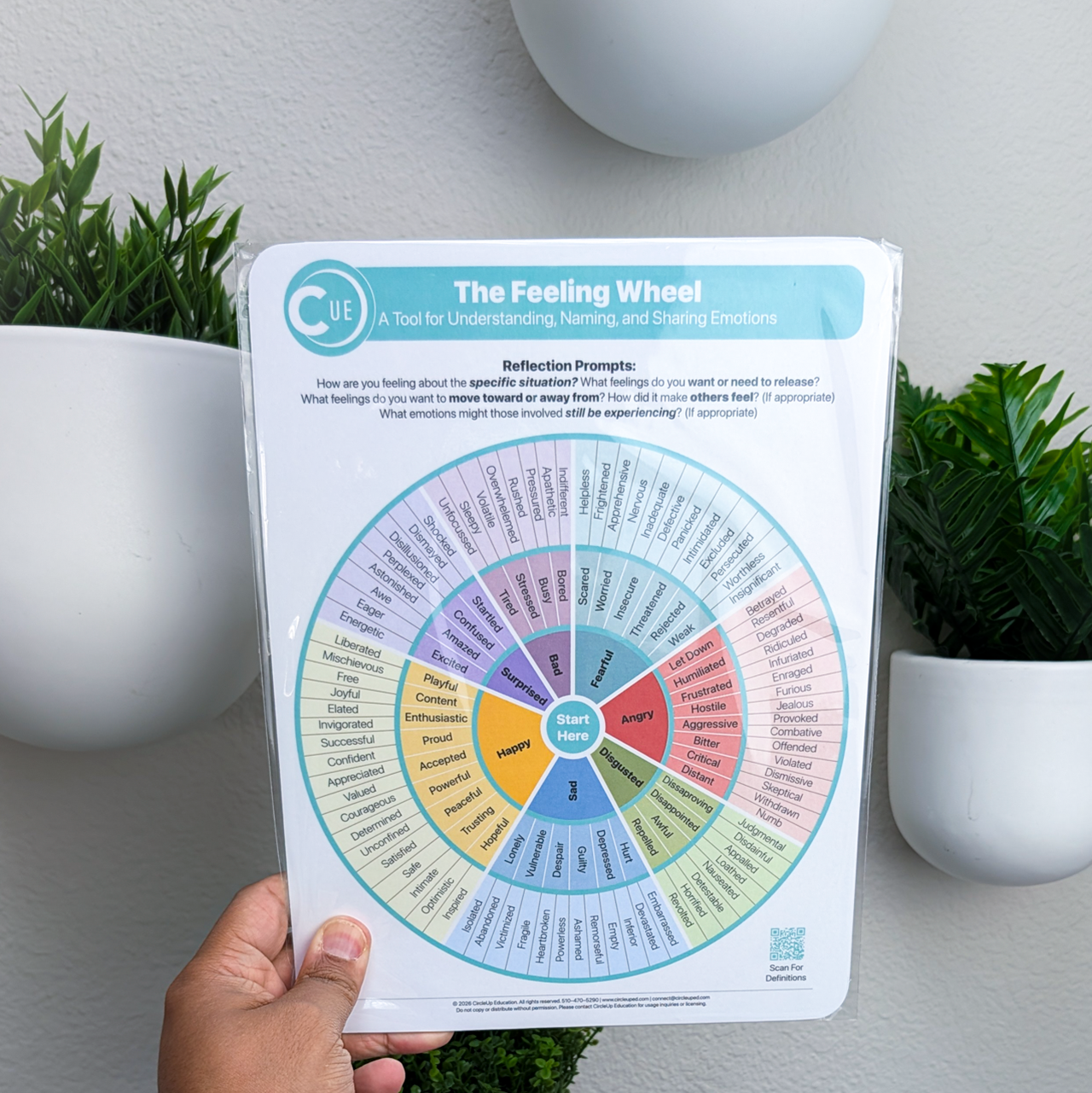

The CircleUp® Feeling Wheel™ is a physical emotion chart designed to help people move beyond broad feelings like happy, sad, angry, or stressed and find more specific words for what they are experiencing.
Start at the center with a broad emotion, then move outward through three levels of increasingly specific feeling words. This simple process can help build emotional vocabulary, deepen reflection, support clearer communication, and create better conversations about feelings and needs.
Each 3-pack includes:
• 3 physical 8.5 × 11 Feeling Wheels
• 100+ feeling words organized from broad to more specific emotions
• Thick 14 pt cardstock for greater durability
• Soft-touch matte lamination for a smooth, premium feel
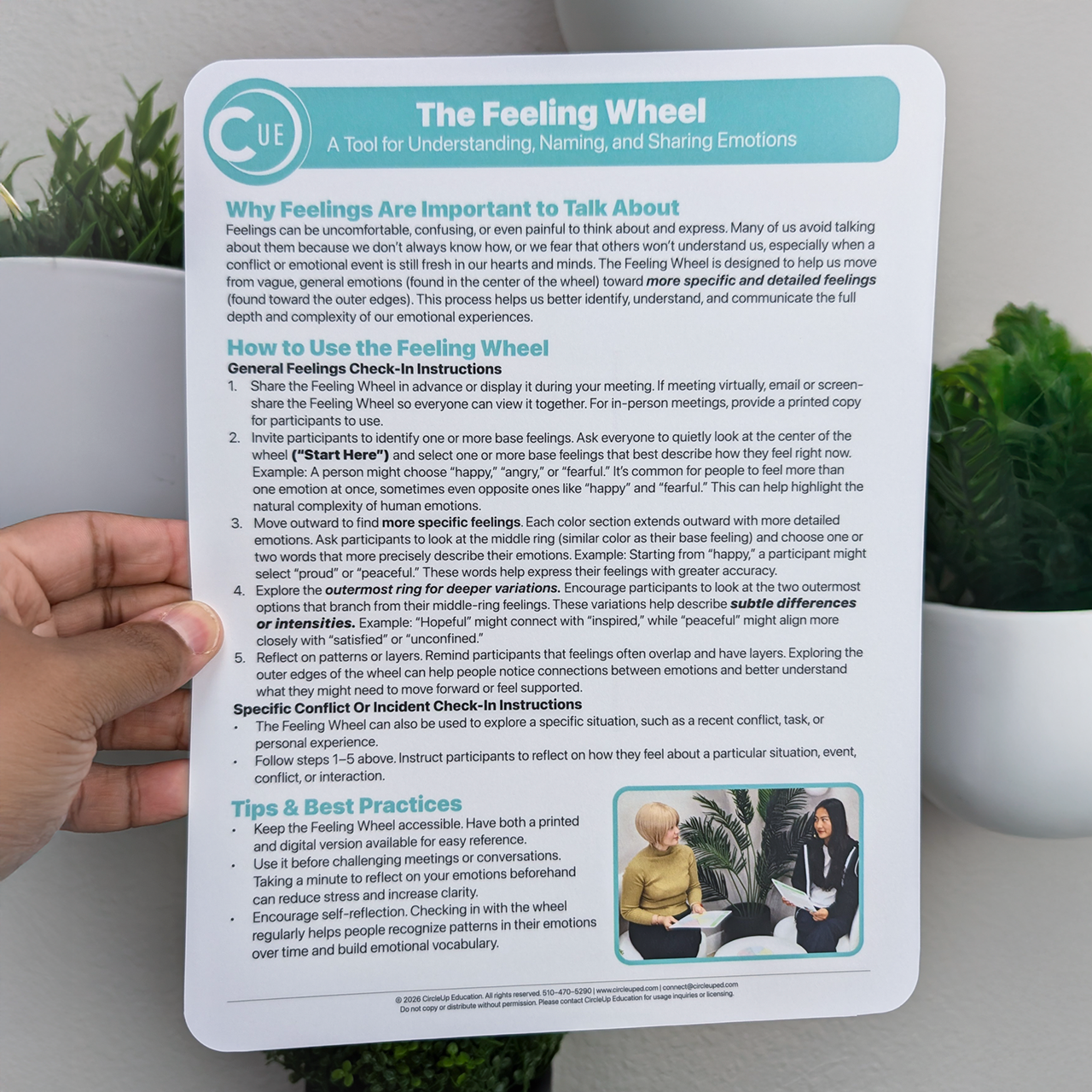
• Double-sided design with the Feeling Wheel on the front and instructions and guidance on the back
• QR access to Feeling Wheel definitions and additional resources
Designed for therapy and counseling, classrooms and SEL, restorative practices, mediation and conflict resolution, workplace teams, youth programs, families, and facilitated group conversations.
This is a physical product—not a digital download.
Couldn't load pickup availability
Pickup available at 401 Roland Way
Usually ready in 24 hoursPairs well with
In stock! Ships next business day. Arrives in 3-8 days!
30-day return policy
Tested by educators & therapist
Low cost shipping
Feeling Wheel 3 Pack, 8.5 x 11 Soft-Touch Matte Laminated Cardstock
Go beyond the first feeling
“Happy.” “Sad.” “Angry.” “Stressed.” Those words are useful places to start—but they rarely tell the whole story.
The CircleUp® Feeling Wheel™ helps people move from broad emotions toward more specific language, creating more clarity for reflection, communication, conflict processing, and understanding what may be needed next.
Buy the Feeling Wheel 3-Pack ↑
How it works
The wheel gives people a visual path from an initial feeling toward words that more precisely describe what is happening.

Begin at the center with the emotion that feels closest. There is no pressure to immediately have the perfect word.
Move into the next layer and notice which words begin to describe the experience with greater clarity.
Continue outward, notice more than one feeling if it is present, and use the words as a starting point for reflection or conversation.
Why specificity matters
When someone can move beyond “I feel bad” or “I’m upset,” they have more information to work with.

See the process
See a real check-in move from a broad feeling toward more precise emotional language—and notice how more than one feeling can be present at the same time.
One tool. Many conversations.

Support emotional identification, reflection, processing, and deeper discussion of an experience.
Use it for check-ins, advisory, calm corners, vocabulary building, reflection, and social-emotional learning.
Pair restorative justice questions such as “What happened?” and “How did it impact you?” with a visual way to explore how the experience actually felt.
Move beyond quick labels toward language that makes impact, emotion, and possible needs easier to discuss.
Create a shared emotional vocabulary for meeting check-ins, retrospectives, difficult conversations, team-building, and debriefs.
Make emotional language visible during check-ins, family conversations, coaching, youth programs, and small groups.

Built to be used again and again
A facilitation tool that gets held, passed around, carried into classrooms, brought into sessions, and reused in groups should feel like a real tool.

Substantially sturdier than ordinary printer paper for repeated professional use.
A smooth tactile finish that gives the wheel a polished, premium feel in the hand.
Emotional vocabulary on the front, with practical instructions and guidance on the reverse.
Inside the 3-pack

Keep one for yourself and use the others with participants, partners, clients, students, small groups, or in multiple spaces.

The reverse side keeps the process close at hand when you bring the wheel into a classroom, session, meeting, mediation, or restorative justice circle.
Why three?
In practice, you may want one wheel for yourself and additional copies for the people you're working with. A 3-pack supports paired reflection, small conversations, multiple rooms, or simply having a backup ready.

A repeatable process
“How are you feeling about what happened?”
Instead of asking someone to immediately produce a perfect emotional explanation, give them something concrete to look at. Start in the center. Move outward. Pause at words that resonate. Notice if there is more than one feeling.
The wheel can support reflection on where someone is now and conversation about how they hope to feel moving forward.
Take a closer look
Watch the wheel move, explore its three layers, and get a closer look at the physical format and finish.
See the movement from the inner circle toward increasingly specific emotional language.
Take a closer look at the features that make it useful as a reusable facilitation tool.

Take the vocabulary with you
Finding the word is only part of the process. Understanding what that word means can make the wheel even more useful.
The printable CircleUp® definitions guide helps participants explore feeling words in greater depth and includes examples that demonstrate how those words can be used.
No phone required
Schools, restorative justice programs, juvenile justice settings, mediation spaces, retreats, treatment environments, and other programs may limit access to phones or digital devices.
A physical Feeling Wheel can travel into those spaces without requiring an app, login, battery, Wi-Fi connection, or screen. Pair it with the printable definitions guide when participants need additional vocabulary support.
Real customer reviews
Hear from customers who have brought the CircleUp® Feeling Wheel™ into classrooms, counseling spaces, restorative justice programs, teams, group conversations, and everyday emotional check-ins.
Questions before purchasing?
When you're ready, use the button below to return to the main product area at the top of this page.
Ready to purchase? ↑This listing is for a physical 3-pack of CircleUp® Feeling Wheels. Each wheel is printed on thick cardstock and finished with soft-touch matte lamination.
Each Feeling Wheel is 8.5 × 11 inches—the same overall size as standard letter paper, but printed on much sturdier material.
The reverse side includes practical instructions and guidance so the process stays with the wheel when you bring it into a classroom, session, meeting, mediation, restorative justice circle, or other facilitated space.
Feeling Wheels are often used in shared conversations. A 3-pack lets you keep one for yourself while giving another to a participant or pair, placing copies in different rooms, or keeping a backup ready.
Yes. The wheel can support emotional identification, reflection, processing, and deeper discussion during counseling and therapy conversations.
Yes. Pair it with restorative justice questions about what happened, impact, feelings, needs, and possible next steps. The wheel gives participants a concrete vocabulary tool while they reflect.
Yes. CircleUp® offers bulk Feeling Wheel options for schools, organizations, programs, trainings, teams, districts, and other larger groups. Explore bulk options →
Yes. Larger Feeling Wheel poster formats are available for spaces where you want emotional vocabulary visible to the entire room. Explore posters →
CircleUp® provides a free printable Feeling Wheel Definitions Guide that can be used alongside the physical wheel. Open the free guide →
Ready when you are
Bring a durable CircleUp® Feeling Wheel™ into the conversations where clarity, reflection, and emotional vocabulary matter.